



What Is Anodized Aluminum Profile? A Complete Guide to Surface Treatment for Furniture Aluminum Profiles
Furniture aluminum profiles are widely used in modern kitchen cabinets, wardrobe sliding doors, glass cabinet frames, office partitions, decorative trims, and minimalist furniture systems. As global demand for custom aluminum extrusion profiles continues to grow, buyers are paying more attention not only to profile design and alloy grades, but also to the quality of aluminum surface treatment.
Among various finishing methods, anodized aluminum profiles remain one of the most popular choices for furniture manufacturers, interior designers, wholesalers, and building material distributors because of their durability, corrosion resistance, elegant appearance, and long service life.
In this article, we will explain:
- What aluminum profile surface treatment is
- Why surface finishing is important for furniture aluminum profiles
- What anodizing treatment is
- The functions and advantages of anodized aluminum
- Different anodizing colors and applications
- How to choose the right anodized aluminum profile supplier
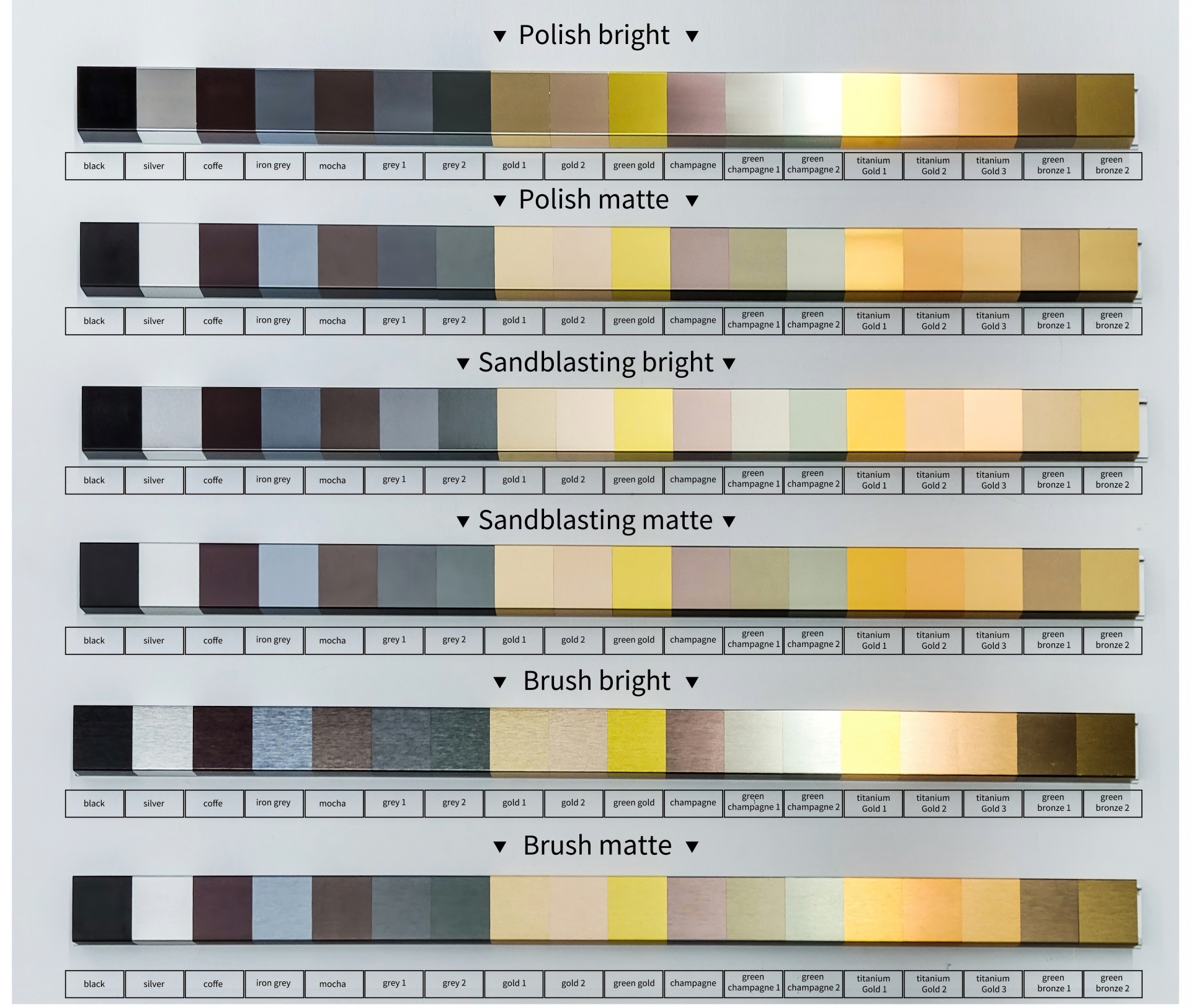
1. What Is Surface Treatment for Aluminum Profiles?
Surface treatment refers to the process of applying a protective or decorative finish to the surface of an aluminum extrusion profile. The purpose is to improve the profile’s appearance, corrosion resistance, wear resistance, oxidation resistance, and service life.
Because raw aluminum can oxidize naturally when exposed to moisture and air, surface finishing is an essential step in furniture aluminum profile manufacturing.
Common surface treatment methods for aluminum profiles include:
- Anodizing
- Powder coating
- Electrophoresis coating
- Wood grain transfer
- Brushed finish
- Polishing
- Sandblasting
Among these processes, anodized aluminum extrusion is especially popular in the furniture industry because it creates a durable oxide layer directly on the aluminum surface.
2. Why Surface Treatment Is Important for Furniture Aluminum Profiles
Furniture aluminum profiles are often exposed to daily touching, humidity, kitchen oil stains, cleaning chemicals, and long-term friction. Without proper surface treatment, the aluminum surface may become scratched, faded, or corroded over time.
High-quality surface finishing provides multiple benefits:
- Improved Corrosion Resistance
Surface treatment protects aluminum from moisture, oxidation, and chemical exposure, especially in kitchens and bathrooms. - Better Appearance
Anodized and coated finishes create a clean, modern, and premium metallic appearance suitable for minimalist furniture design. - Enhanced Scratch Resistance
Furniture profiles used in sliding doors, cabinet frames, and drawer systems require strong wear resistance. - Longer Product Lifespan
Quality finishing reduces maintenance costs and extends the service life of aluminum furniture systems. - Higher Market Value
Premium surface finishing increases the competitiveness of aluminum furniture products in global markets.
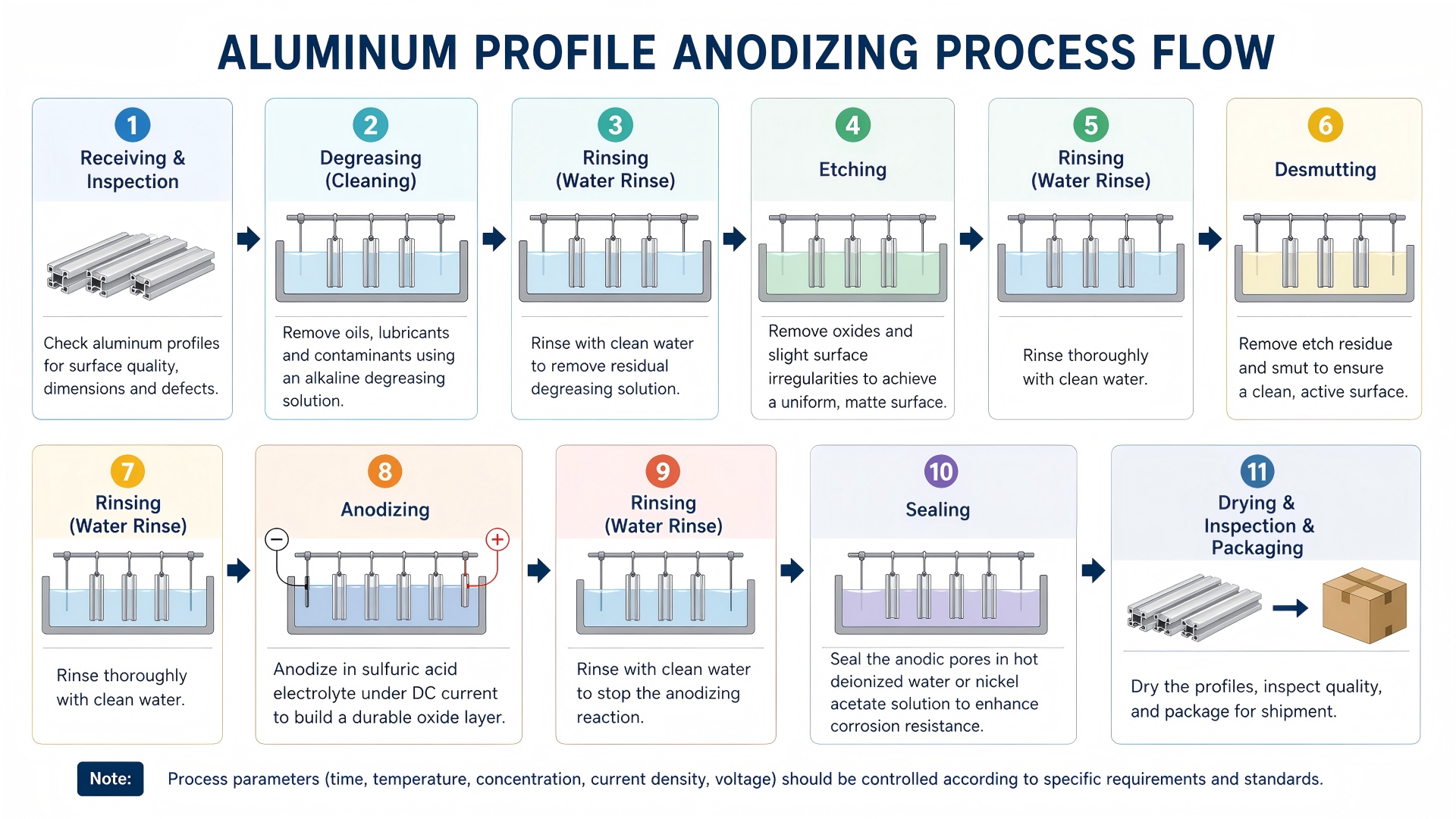
3. What Is Anodized Aluminum Surface Treatment?
Anodizing is an electrochemical process that forms a thick and durable oxide layer on the surface of aluminum profiles.
Unlike paint or coating that sits on top of the metal, the anodized layer becomes part of the aluminum itself. This makes anodized aluminum profiles more durable and resistant to peeling, cracking, or fading.
The anodizing process usually includes:
- Cleaning and degreasing the aluminum profile
- Immersing the profile into an electrolyte solution
- Applying electric current to create an oxide layer
- Coloring if required
- Sealing the surface for additional protection
The thickness of the anodized layer can vary depending on the application requirements. For furniture aluminum profiles, common anodizing thickness ranges from 8μm to 15μm.
Popular anodized colors include:
- Silver anodized aluminum
- Black anodized aluminum
- Champagne anodized aluminum
- Gold anodized aluminum
- Bronze anodized aluminum
- Matt anodized finish
4. Functions and Advantages of Anodized Aluminum Profiles
Anodized aluminum profiles are widely used in modern furniture manufacturing because they combine beauty with functionality.
- Excellent Corrosion Resistance
The oxide layer protects aluminum from rust, moisture, and oxidation, making it ideal for kitchen cabinet frames and bathroom furniture. - Strong Wear Resistance
Anodized surfaces are harder than raw aluminum and can better resist scratches during daily use. - Modern Metallic Appearance
Anodizing preserves the natural metallic texture of aluminum while improving visual quality. - Easy Maintenance
Anodized furniture aluminum profiles are easy to clean and maintain. - Eco-Friendly Surface Treatment
Compared with some coating methods, anodizing is considered more environmentally friendly. - Color Stability
High-quality anodized finishes maintain color consistency for years.
5. Applications of Anodized Furniture Aluminum Profiles
Today, anodized aluminum extrusion profiles are widely used in:
- Kitchen cabinet aluminum frame profiles
- Wardrobe sliding door aluminum profiles
- Glass cabinet door frames
- Aluminum G handle profiles
- Aluminum U channel profiles
- Decorative trim profiles
- LED aluminum profiles
- Office partition systems
- Bathroom aluminum profiles
- Minimalist furniture systems
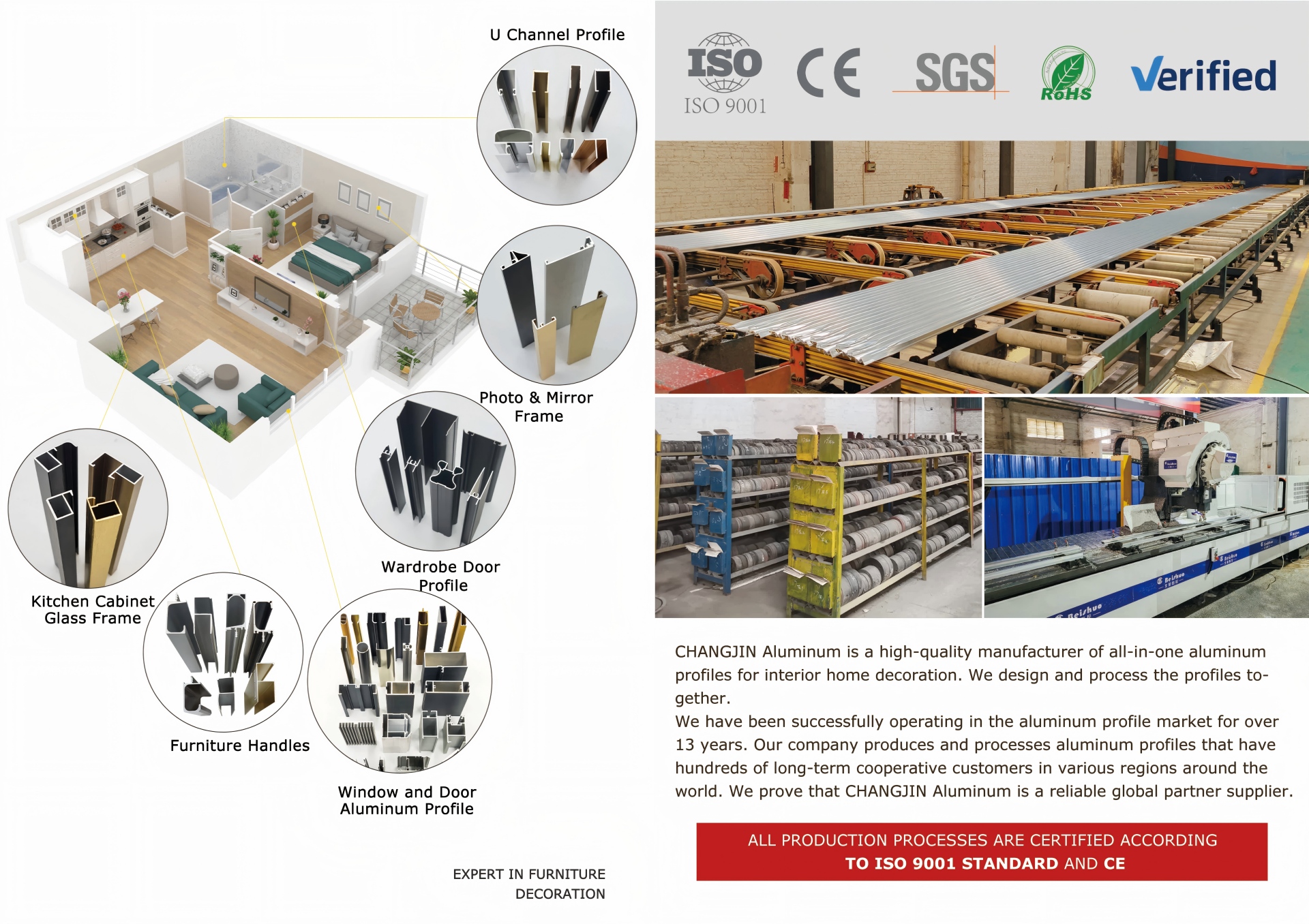
6. How to Choose a Reliable Anodized Aluminum Profile Supplier
Choosing the right supplier is critical for ensuring stable product quality and long-term cooperation.
When sourcing furniture aluminum profiles, buyers should pay attention to:
- Aluminum alloy grade such as 6063 or 6061
- Anodizing thickness standards
- Color consistency
- Surface smoothness and scratch resistance
- Custom extrusion capability
- OEM & ODM manufacturing support
- Export experience
- Production capacity and delivery time
Professional aluminum extrusion manufacturers can also provide customized molds, CNC machining, drilling, cutting, and deep processing services according to customer drawings.
7. Why Anodized Aluminum Profiles Are Becoming More Popular
As modern furniture design trends move toward lightweight materials, minimalist aesthetics, and sustainable manufacturing, anodized aluminum profiles are becoming increasingly popular worldwide.
Compared with traditional wooden or steel furniture materials, anodized aluminum offers:
- Lighter weight
- Better corrosion resistance
- Modern appearance
- Longer durability
- Lower maintenance costs
- Recyclable and eco-friendly characteristics
This is why more cabinet factories, furniture wholesalers, interior contractors, and building material distributors are switching to aluminum furniture systems.
FAQ About Anodized Furniture Aluminum Profiles
1. What is the difference between anodized aluminum and powder coated aluminum?
Anodizing creates a protective oxide layer directly on the aluminum surface, while powder coating adds an external colored coating. Anodized aluminum usually has a more metallic appearance and better wear resistance.
2. Is anodized aluminum suitable for kitchen cabinets?
Yes. Anodized aluminum profiles are highly resistant to moisture, oil stains, and corrosion, making them ideal for kitchen cabinet applications.
3. Can anodized aluminum profiles be customized?
Yes. Professional aluminum extrusion manufacturers can provide custom sizes, shapes, colors, and surface finishes based on drawings or samples.
4. Which aluminum alloy is best for anodizing?
6063 aluminum alloy is one of the most commonly used materials for anodized furniture aluminum profiles because of its excellent extrusion and surface finishing performance.
5. Does anodized aluminum fade over time?
High-quality anodized aluminum has excellent color stability and can maintain its appearance for many years under normal indoor use.
Looking for a Reliable Furniture Aluminum Profile Manufacturer?
We provide custom aluminum extrusion solutions for kitchen cabinets, wardrobe doors, glass frames, decorative trims, and furniture systems.
Contact us now for catalogs, free samples, and quotation support.
Send Inquiry Now
 8613602979735
 mail
mail